10 Tiny Pantry Design Walk In Kitchen Ideas That Make Small Spaces Feel Bigger
A walk-in pantry sounds like a luxury reserved for large kitchens, but even a tiny pantry can become one of the most useful spaces in a home. The trick is not having more square footage. It is making every shelf, corner, wall, and doorway work harder.
Small pantry spaces often become cluttered quickly. Cereal boxes pile up, cans disappear behind taller containers, appliances occupy valuable shelves, and everyday ingredients become difficult to reach. A narrow walk-in pantry can feel especially frustrating when its storage system was never designed around the way the household actually uses it.
A thoughtful layout changes that experience.
The best small pantry designs use vertical storage, shallow shelving, clear containers, baskets, labeled zones, and carefully selected accessories to make limited space easier to navigate. Some designs focus on maximizing every inch, while others intentionally leave a little breathing room so the pantry feels calm instead of packed.
In my experience, the most practical pantry is not necessarily the one with the most shelves. It is the one where frequently used ingredients are easy to see and reach. Once everyday items have a logical home, maintaining the space becomes much simpler.
Whether your pantry is a narrow closet tucked beside the refrigerator or a compact walk-in room with just enough space for one person, these ideas can help you create a storage system that feels organized, attractive, and realistic for everyday cooking.
From floor-to-ceiling shelving to hidden appliance zones, here are ten ways to turn a compact pantry into a hardworking extension of the kitchen.
Table of Contents
1. Floor-To-Ceiling Shelves
Use the entire wall height to create generous storage without expanding the pantry footprint.
2. Narrow Shelf Rows
Shallow shelves make narrow pantries easier to organize and prevent food from disappearing at the back.
3. Corner Storage
Smart corner solutions turn awkward areas into useful storage for less frequently used items.
4. Pull-Out Drawers
Sliding drawers bring cans, jars, and pantry staples forward for easier access.
5. Appliance Station
Create a dedicated zone for small appliances while keeping the main kitchen counters clear.
6. Doorway Storage
Use the pantry door or nearby wall space for lightweight, frequently used items.
7. Clear Container System
Uniform containers improve visibility and make dry ingredients easier to organize.
8. Basket Zones
Baskets group similar products together while adding warmth and visual order.
9. Floor Storage
Use the lower portion of the pantry for bulk goods, beverages, and heavier kitchen supplies.
10. Light Neutral Finish
A bright palette, good lighting, and simple materials can make a tiny pantry feel more spacious.
1. Floor-To-Ceiling Shelves
Quick Benefits
- Maximizes vertical storage
- Uses otherwise wasted wall space
- Creates dedicated zones
- Keeps food visible
- Works in very narrow rooms
Why It Works
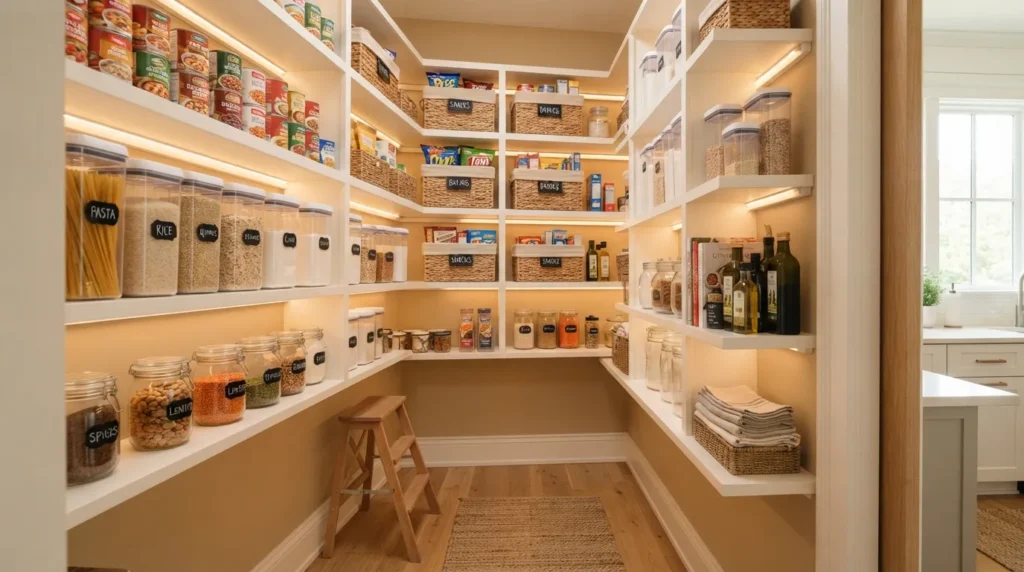
When floor space is limited, the walls become the pantry’s greatest asset. Floor-to-ceiling shelving turns unused vertical space into multiple storage levels without making the room wider.
This arrangement is particularly useful in a walk-in pantry where the shelving can extend nearly to the ceiling. Everyday foods can stay at eye level, while backup supplies and less frequently used items occupy the upper shelves.
The key is creating a practical hierarchy rather than filling every shelf randomly. Lower levels work well for heavier products, middle shelves are ideal for frequently used ingredients, and higher shelves can hold seasonal serving pieces or extra supplies.
Vertical storage also gives a small pantry a more built-in appearance. Instead of a collection of separate shelves, the room feels intentionally designed around storage.
How To Style It
Install sturdy shelving along the longest uninterrupted walls. Adjustable shelves are particularly useful because pantry items change in size over time.
Keep frequently used ingredients between waist and eye level. Place cans, jars, and heavier containers lower down, where they are easier to lift safely.
If the ceiling is high, use matching baskets on the upper shelves to keep backup supplies contained. A small step stool can make those shelves practical without occupying much floor space.
For a polished appearance, use one consistent shelf material throughout the pantry. White shelving creates a clean look, while natural wood introduces warmth.
Leave a small amount of visual space between categories rather than packing every shelf completely full.
2. Narrow Shelf Rows
Quick Benefits
- Makes narrow pantries easier to navigate
- Prevents forgotten items
- Improves visibility
- Creates simple food categories
- Preserves walking space
Why It Works
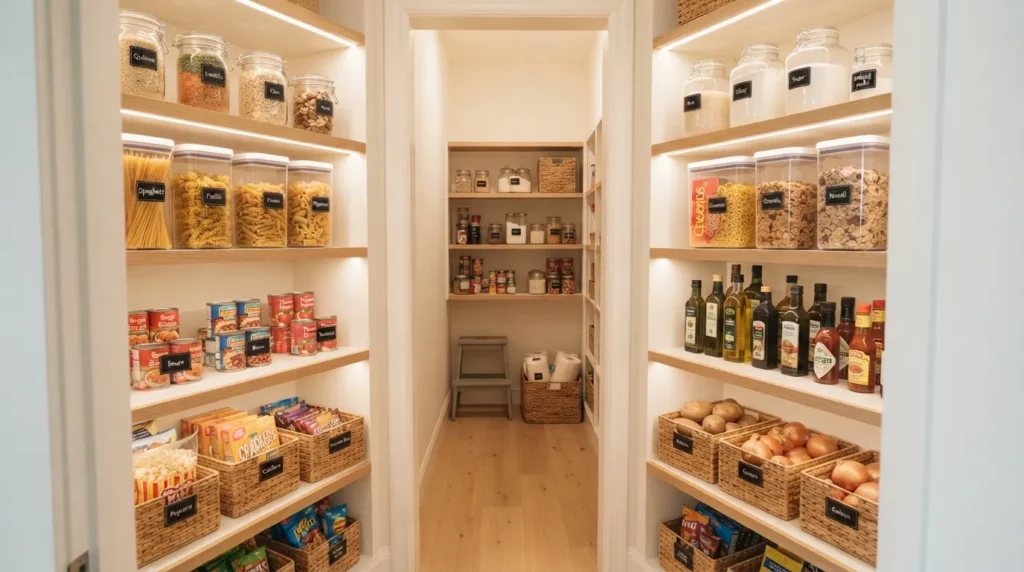
Deep shelves can seem attractive because they offer more capacity, but excessive depth often creates a hidden problem: food gets pushed toward the back and forgotten.
Shallow shelving solves that issue by keeping most products within view. In a tiny walk-in pantry, this can be more valuable than simply adding more storage volume.
Shelves around 8 to 12 inches deep can work well for many packaged foods, jars, cans, and containers, although the ideal depth depends on what you store. The goal is to create shelves that support the products rather than swallow them.
A narrow shelf system also leaves more room for a walking path. This matters in a compact walk-in pantry where every additional inch of clearance affects how comfortable the room feels.
How To Style It
Use shallow shelves on both sides of a narrow pantry when enough clearance remains for comfortable movement. If the room is especially tight, shelving on one wall may create a more functional layout.
Arrange items by category rather than simply by size. Create areas for breakfast foods, baking ingredients, snacks, canned goods, and everyday cooking staples.
Small risers can add a second level inside deeper shelves, allowing shorter jars and cans to remain visible.
Avoid stacking too many items in front of one another. A pantry is easier to maintain when you can see what you have at a glance.
3. Corner Storage
Quick Benefits
- Makes awkward corners useful
- Adds capacity without expanding the room
- Creates space for specialty items
- Reduces dead zones
- Works with custom shelving
Why It Works
Corners are among the easiest places to waste in a small pantry. Standard shelves may stop before reaching the corner, leaving a dark, inaccessible area that slowly becomes storage for things nobody remembers owning.
Thoughtful corner storage can change that.
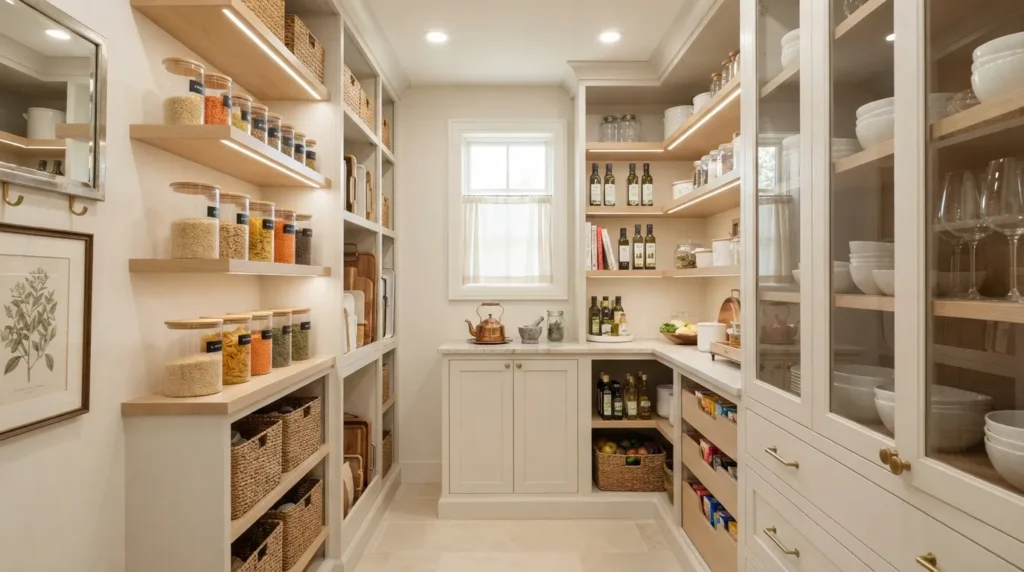
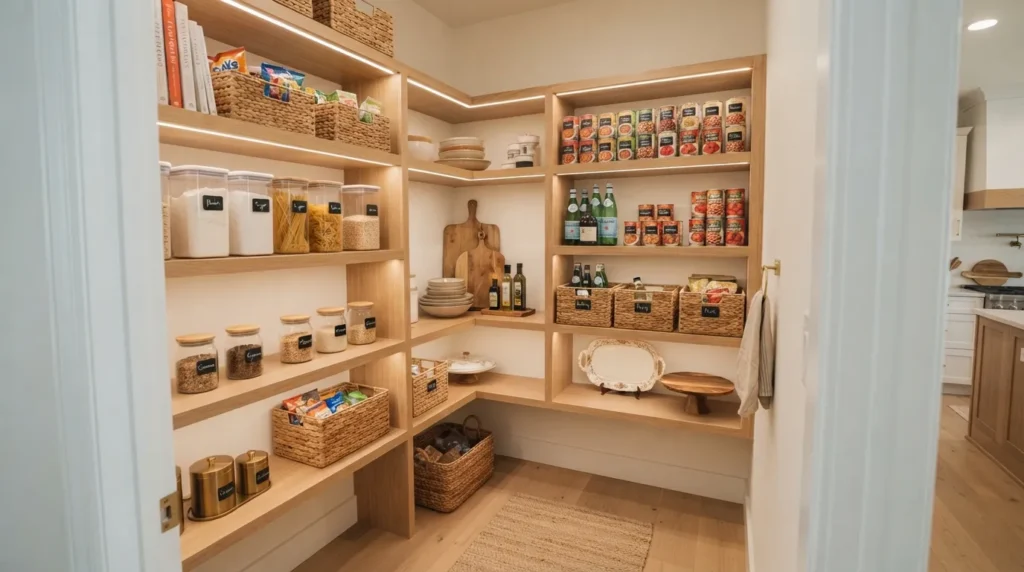
Instead of forcing every shelf into one straight line, consider an L-shaped configuration that connects adjacent walls. This creates a continuous storage system and makes the pantry feel more like a built-in room.
Corner shelves are especially useful for items that are not needed every day. Large serving bowls, extra paper products, specialty baking equipment, or seasonal ingredients can live farther from the primary work zone.
The most important consideration is accessibility. A corner is only useful if you can reach the items stored there.
How To Style It
Use L-shaped shelving where the pantry dimensions allow it. Keep the corner area slightly less crowded than the main shelves so items remain reachable.
For a difficult lower corner, consider a rotating organizer or pull-out solution. These systems can bring products forward instead of requiring you to reach deep into a dark space.
Store occasional-use items in corners and reserve the easiest-to-reach shelves for everyday ingredients.
If using open wood shelving, continue the same finish around the corner. Consistency makes the entire pantry feel more intentional.
4. Pull-Out Drawers
Quick Benefits
- Improves access to deep storage
- Makes small items easier to find
- Works well for cans and jars
- Reduces back-of-shelf clutter
- Adds convenience to compact layouts
Why It Works
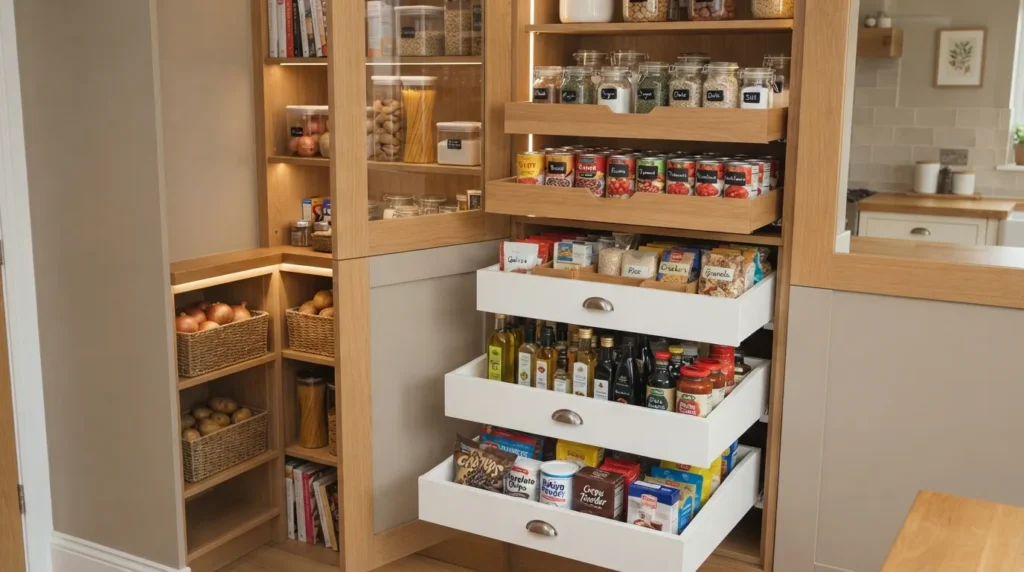
Pull-out drawers are particularly valuable when the pantry contains shelves that are deeper than ideal. Instead of reaching around bottles or moving several items to find one ingredient, the entire drawer comes forward.
This is especially helpful for cans, jars, sauces, baking ingredients, and smaller packaged foods.
Drawers can also create a more flexible storage system because each one becomes a contained category. One drawer might hold canned vegetables, another baking supplies, and another snack items.
In a small pantry, organization is partly about reducing friction. When an ingredient can be pulled toward you instead of searched for, cooking becomes easier and the pantry stays more orderly.
How To Style It
Install pull-out drawers in lower or middle sections where they can be accessed comfortably.
Use shallow drawers for cans and small packages. Deeper drawers can hold bags, backup ingredients, or larger kitchen supplies.
Add simple labels to the front if the categories are not immediately obvious. Neutral labels keep the appearance clean.
Avoid overloading drawers. Heavy items can make sliding mechanisms difficult to use, while excessive stacking can recreate the same visibility problem found on deep shelves.
Pair pull-outs with open shelving above to create a combination of visible and concealed storage.
5. Appliance Station
Quick Benefits
- Keeps countertops clear
- Gives appliances a dedicated home
- Makes everyday cooking easier
- Uses pantry space efficiently
- Reduces visual clutter
Why It Works
Small appliances can consume an enormous amount of kitchen counter space. Coffee makers, mixers, toasters, air fryers, blenders, and food processors all need somewhere to live.
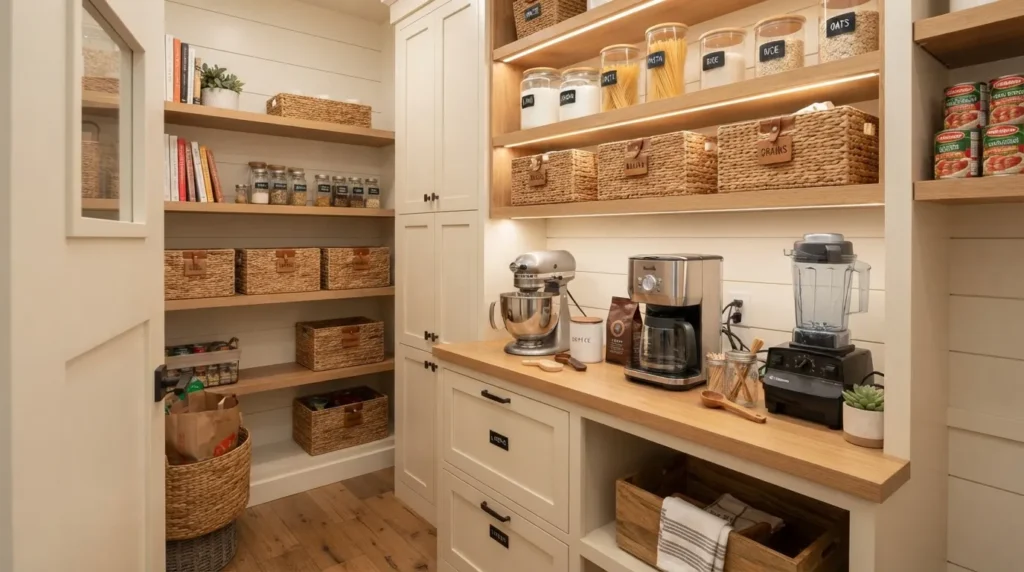
A compact walk-in pantry can become an appliance station, especially when the kitchen itself has limited counter space.
The most useful arrangement keeps appliances that are used frequently at a comfortable height. Less frequently used machines can go on lower shelves.
If electrical access is available and appropriate for the space, a dedicated appliance area can allow certain appliances to remain ready for use rather than being repeatedly moved in and out.
Safety and ventilation matter. Appliances that generate heat should be positioned according to manufacturer requirements and local electrical guidance rather than simply tucked into the tightest available corner.
How To Style It
Create one shelf or counter-height section specifically for small appliances. Group related accessories nearby so cords, attachments, and containers do not spread throughout the pantry.
Use a simple tray or cable-management solution to keep cords contained.
If space permits, add a narrow countertop below open shelving. This creates a miniature prep station for coffee equipment, baking appliances, or occasional food preparation.
Keep the area visually restrained. The goal is a useful work zone, not another cluttered counter.
6. Doorway Storage
Quick Benefits
- Uses overlooked space
- Adds storage without reducing floor area
- Keeps small items accessible
- Works well for lightweight products
- Helps organize narrow pantries
Why It Works
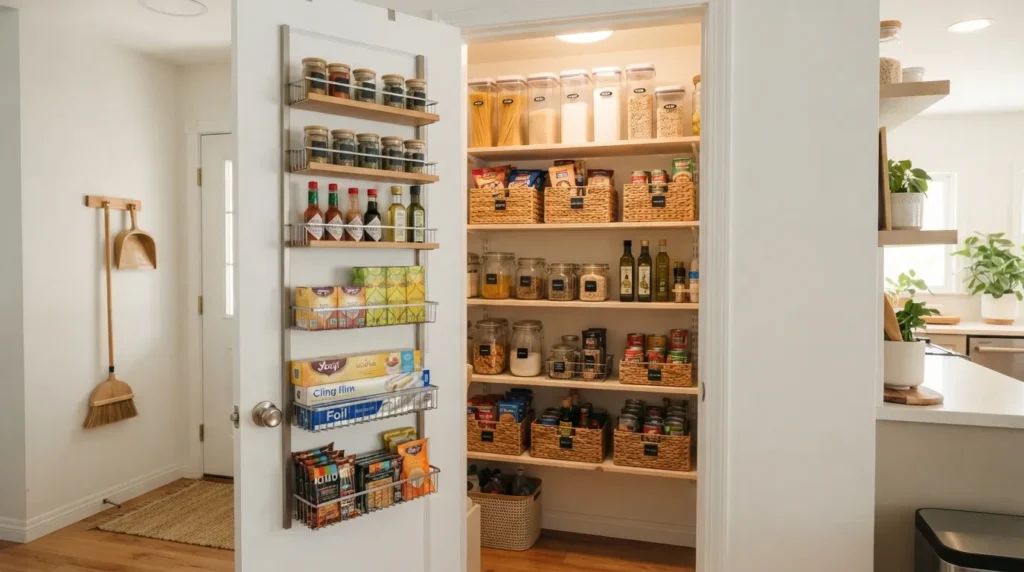
The pantry door is often an overlooked storage opportunity. A slim rack attached to or mounted near the door can hold spices, sauces, wraps, snacks, cleaning supplies, or other lightweight items.
Because this storage sits close to the entrance, it is particularly useful for things you reach for frequently.
Door storage also helps preserve valuable shelf space. Instead of using a full shelf for small packets or bottles, these items can occupy narrow vertical compartments.
The important limitation is weight. Door-mounted systems need to be installed securely and used according to their weight capacity. An overloaded door can become difficult to open and may strain hinges.
How To Style It
Choose a narrow organizer with compartments that fit the products you actually use. Measure the available clearance before installing anything.
Keep small, lightweight items on the door. Spices, snack packets, tea, wraps, and condiment bottles can work well depending on the organizer.
Group products by use so the door becomes a quick-access zone rather than another random storage area.
For a built-in appearance, coordinate the organizer with the pantry shelving. White or neutral finishes blend easily into most small kitchens.
7. Clear Container System
Quick Benefits
- Improves visibility
- Creates a uniform appearance
- Makes dry ingredients easy to identify
- Simplifies inventory
- Reduces packaging clutter
Why It Works
Clear containers can make a small pantry feel dramatically more organized because they reduce the visual noise created by mismatched packaging.
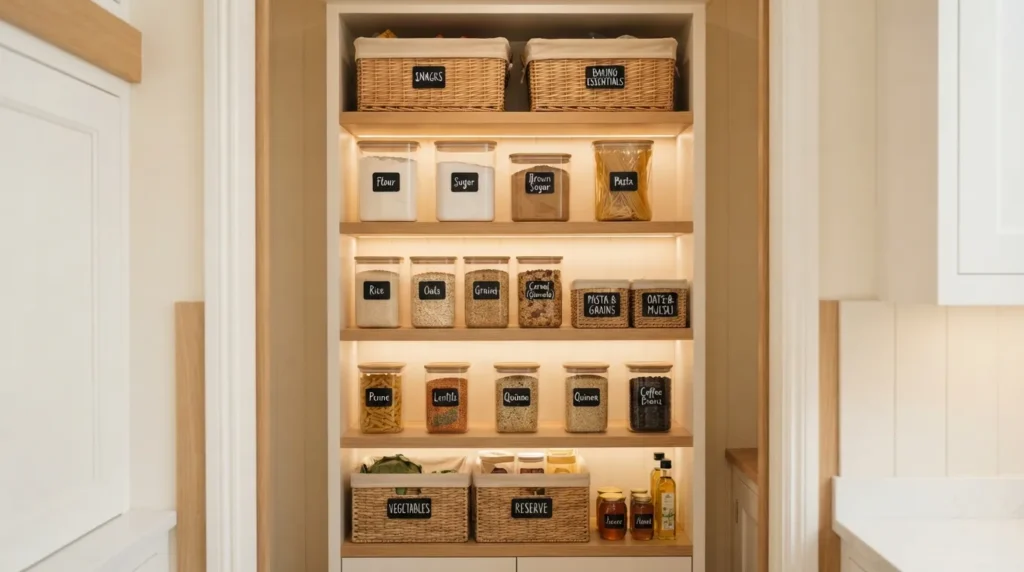
Flour, sugar, rice, pasta, oats, cereal, and other dry ingredients can be transferred into appropriately sized containers so the contents remain visible.
The greatest benefit is not aesthetics. It is awareness. When ingredients are visible, it becomes easier to notice what is running low and avoid buying duplicates.
A consistent container system also makes shelves easier to arrange. Instead of working around bags and boxes of different shapes, you can create cleaner rows.
There is no need to transfer every pantry item. Focus on the foods that benefit most from containers and leave sealed packages in their original packaging when that is more practical.
How To Style It
Choose containers with shapes that fit the shelf depth. Square or rectangular containers often use shelf space efficiently because they can sit closely together.
Use simple labels with the ingredient name. If several ingredients look similar, include additional details such as type or variety.
Place frequently used containers at eye level and backup supplies higher or lower.
Keep a small amount of empty space around container groups. This makes it easier to remove individual items without disturbing an entire row.
8. Basket Zones
Quick Benefits
- Groups similar products
- Hides visual clutter
- Adds warmth
- Makes categories portable
- Works on open shelving
Why It Works
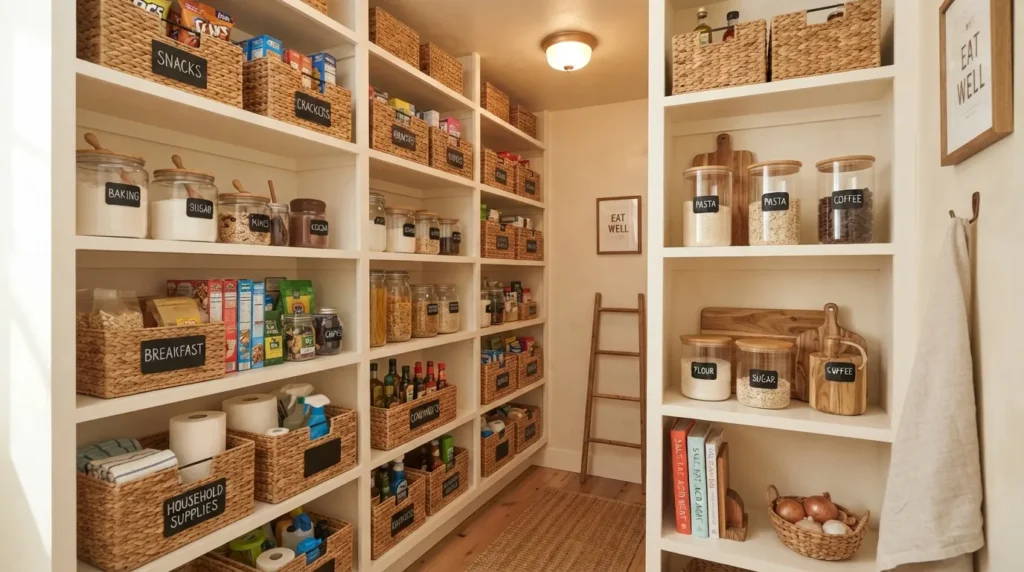
Baskets are useful when the pantry contains products that do not stack neatly. Snack packets, onions, potatoes, extra napkins, and baking accessories can all become difficult to organize when placed loose on open shelves.
A basket creates a defined zone.
This is particularly effective in a small pantry because categories become visually obvious. Instead of scanning an entire shelf for a bag of chips, you know exactly which basket contains snacks.
Baskets also add texture to a pantry. Natural woven materials can soften an otherwise utilitarian room, while fabric or wire baskets can provide a cleaner modern look.
The best basket system is based on actual habits rather than decoration. If a category is used every day, the basket needs to be easy to pull out and return.
How To Style It
Use medium-sized baskets for broad categories such as snacks, baking supplies, breakfast items, or extra paper products.
Avoid making baskets too deep. If products disappear underneath one another, the basket stops improving visibility.
Place heavier baskets on lower shelves and lighter ones higher up.
For a cohesive appearance, choose one basket material or color family throughout the pantry. Simple labels can identify each category without making the space feel overly formal.
9. Floor Storage
Quick Benefits
- Uses otherwise empty lower space
- Handles bulky products
- Keeps heavy items accessible
- Works for beverage storage
- Protects upper shelves from excess weight
Why It Works
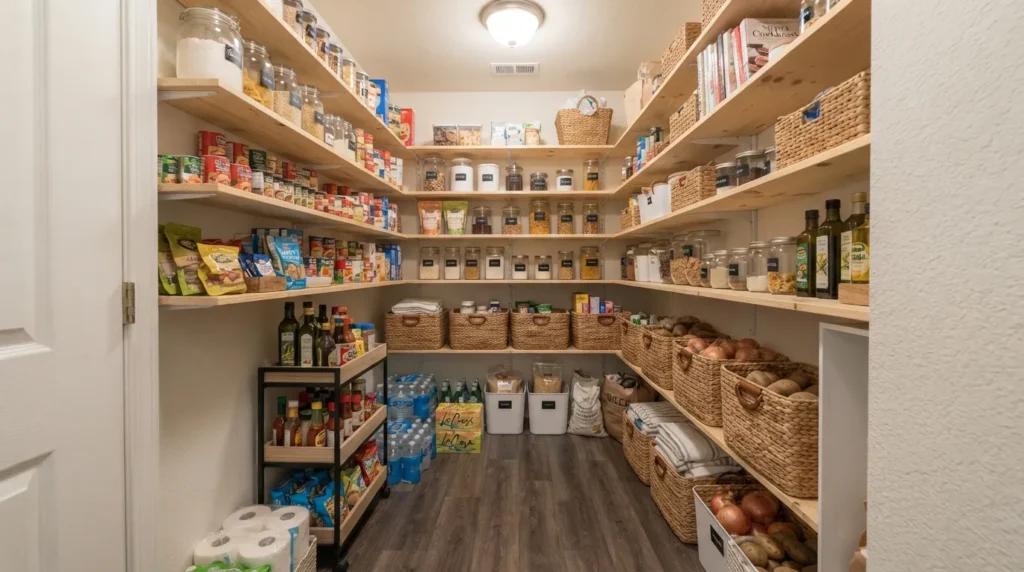
The floor is another useful storage zone in a tiny pantry, but it needs to remain controlled. Bulky items such as beverage cases, large cooking oil containers, pet food, paper products, or backup household supplies can take up valuable shelf space if they are not given a dedicated location.
Floor storage works best for heavy items because lifting them onto high shelves can be awkward.
The challenge is maintaining a clear walking path. A small pantry can quickly become uncomfortable if floor storage spreads across the room.
A defined zone keeps the storage useful without turning the floor into a dumping area.
How To Style It
Use low baskets, bins, or a narrow rolling cart to contain bulky items. A rolling cart can be especially useful because it allows you to move supplies forward when cleaning or restocking.
Place heavy products along the perimeter rather than directly in the walking path.
Use the floor for backup supplies rather than everyday ingredients whenever possible. This keeps the main shelves easier to navigate.
If the pantry has a particularly narrow entrance, measure the width of carts and bins carefully before purchasing them. A storage solution is only useful if it can move comfortably through the doorway.
10. Light Neutral Finish
Quick Benefits
- Creates a brighter appearance
- Makes shelving easier to see
- Supports a clean aesthetic
- Reflects available light
- Works with many kitchen styles
Why It Works
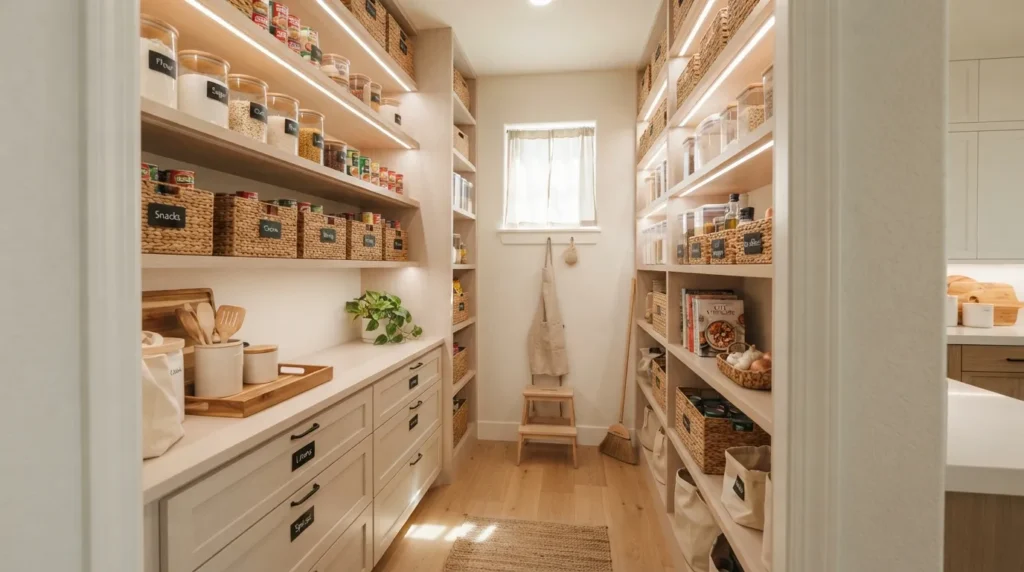
A small pantry can feel enclosed when the walls, shelving, and storage containers are all dark. A light neutral palette helps create visual continuity and makes the room easier to navigate.
White, warm ivory, pale beige, and light greige can all work beautifully. The choice depends on the surrounding kitchen and the amount of natural light available.
Lighting is just as important as paint color. A bright overhead fixture combined with practical shelf or under-shelf lighting can eliminate shadows and make ingredients easier to identify.
The goal is not to make the pantry look like a showroom. It is to create a space where the storage system remains visible and the room feels comfortable to use.
How To Style It
Choose a light wall color and coordinate it with the shelving. Warm white is a versatile choice for most kitchens, while pale beige can introduce a softer appearance.
Add practical lighting that illuminates the shelves rather than simply lighting the center of the room. Follow electrical codes and use appropriate fixtures for the space.
Natural wood shelves can add warmth against light walls. If using white shelving, introduce texture through baskets, labels, and wooden accessories.
Keep decorative pieces limited. A small framed print, simple container, or plant-safe decorative accent can add personality, but storage remains the priority.
Planning a Tiny Walk-In Pantry
Before purchasing organizers, measure the room carefully. Record the width, length, ceiling height, doorway clearance, and location of any outlets, vents, switches, or pipes.
Then make a simple inventory of what the pantry actually needs to hold.
Separate items into categories such as:
- Everyday cooking ingredients
- Baking supplies
- Breakfast foods
- Snacks
- Canned goods
- Beverages
- Small appliances
- Serving pieces
- Bulk purchases
- Household supplies
This inventory makes it easier to determine the type of storage required.
For example, someone who buys large quantities of canned goods may benefit from pull-out drawers and risers. Someone who cooks frequently with dry ingredients may prefer a clear-container system. A coffee enthusiast might dedicate an entire shelf to coffee equipment and supplies.
The layout needs to follow your habits.
How to Organize Shelves by Height
A simple vertical hierarchy can make a compact pantry much easier to use.
Eye level: Everyday ingredients, breakfast foods, frequently used snacks, and common cooking staples.
Waist level: Cans, jars, baking ingredients, and other regularly accessed products.
Lower shelves: Heavy containers, appliances, beverages, and bulk purchases.
Upper shelves: Backup supplies, seasonal items, serving pieces, and less frequently used products.
This approach reduces unnecessary reaching and makes the pantry easier to maintain.
It also helps prevent one of the most common small-pantry problems: storing the things you use every day in the least accessible places.
Making a Small Pantry Feel Larger
Visual simplicity can make a major difference.
Keep the palette limited to two or three main finishes. Consistent containers reduce packaging variation. Matching baskets create visual rhythm. Light walls reflect available illumination.
Shelf depth matters too. If shelves are unnecessarily deep, the room can feel crowded and products can become difficult to see.
Leave enough walking clearance to comfortably enter, turn, and reach the shelves. A pantry does not benefit from maximum storage if using that storage becomes frustrating.
Another useful trick is keeping the most attractive items toward visible areas and storing backup supplies behind closed or contained zones.
The goal is not to make every shelf decorative. It is to make the room feel predictable and easy to use.
Small Pantry Mistakes to Avoid
One common mistake is buying organizers before measuring. Containers and baskets that look perfect online may be too deep, too wide, or too tall for the actual shelves.
Another problem is creating categories that are too specific. Ten tiny categories can make a pantry harder to maintain than five broad ones.
Overfilling is another issue. A completely packed shelf may technically hold more products, but it makes every item harder to remove.
Finally, do not overlook lighting. Even the most beautifully designed pantry becomes frustrating when the back corners remain dark.
Start with function, then refine the appearance.
Related Articles
- 10 Small Kitchen Organization Ideas for More Storage
- 10 Kitchen Pantry Organization Ideas for a Clutter-Free Home
- 10 Modern Kitchen Storage Ideas That Save Space
- 10 Small Kitchen Design Ideas for a More Open Feel
- 10 Farmhouse Pantry Ideas With Beautiful Rustic Storage
Frequently Asked Questions
How small can a walk-in pantry be?
A walk-in pantry can be surprisingly compact, but comfortable dimensions depend on the layout, shelving depth, and available walking clearance. A narrow pantry can work well when shelving remains shallow and the central pathway stays open. Before planning the design, measure the doorway and usable wall space rather than relying only on the overall room dimensions.
What is the best shelving depth for a small pantry?
Shallower shelving is often easier to use in a compact pantry because food remains visible and accessible. The ideal depth depends on what you store. Cans and jars require less depth than small appliances or bulk goods. Adjustable shelves provide additional flexibility when pantry contents change.
How do you maximize space in a tiny pantry?
Use vertical shelving, shallow shelves, corner storage, door organizers, pull-out drawers, baskets, and appropriately sized containers. Assign different heights to different categories and reserve the most accessible areas for everyday items. Keeping products visible also helps prevent wasted space caused by duplicate purchases or forgotten food.
Should pantry shelves go to the ceiling?
Floor-to-ceiling shelves can be an excellent option when vertical space is limited horizontally. Use the upper shelves for backup or occasional-use items and keep everyday products at comfortable heights. A small step stool can make higher shelves easier to access.
How do you organize a narrow walk-in pantry?
Start by protecting the walking path. Use shallow shelves along the available walls and group products by broad categories. Keep everyday foods at eye and waist level, heavier products lower down, and backup supplies higher up. Avoid excessive shelf depth because it can make a narrow pantry feel crowded.
Are clear pantry containers worth using?
Clear containers can be useful for dry ingredients because they improve visibility and create consistent storage dimensions. They are most valuable for foods that are frequently purchased or transferred, such as pasta, rice, flour, sugar, cereal, and oats. There is no need to decant every pantry product.
How do you make a tiny pantry look organized?
Use a limited color palette, consistent containers, labeled categories, matching baskets, and adequate lighting. Avoid filling shelves completely. A small amount of visible breathing room makes the pantry easier to navigate and gives the storage system a more intentional appearance.
Conclusion
A tiny walk-in pantry can become one of the hardest-working spaces in a kitchen when its design starts with everyday habits rather than decoration alone.
Floor-to-ceiling shelving makes use of vertical space. Narrow shelves improve visibility. Pull-out drawers bring deep storage forward, while baskets and containers create simple categories. Door storage, corner solutions, appliance stations, and floor zones add even more capacity without requiring a larger room.
The most important step is understanding what your pantry actually needs to hold. Once you know which foods, appliances, and supplies need a home, the right storage solutions become much easier to choose.
Do not feel pressured to fill every inch. A pantry with slightly less storage but better visibility can be far more useful than one packed from floor to ceiling.
Start with one improvement, such as replacing deep shelves with shallower ones or creating a dedicated snack basket. Then build from there.
A well-planned pantry does more than store groceries. It makes everyday cooking, shopping, meal preparation, and cleanup feel a little easier. In a small kitchen, that practical difference can have a surprisingly large impact.