10 Small Pantry Design Luxury Layout Ideas That Make Every Inch Feel Elegant
A small pantry can have the look and function of a much larger space when the layout is carefully considered. Luxury in a pantry is not always about expensive materials or oversized rooms. Often, it comes from thoughtful proportions, beautiful finishes, good lighting, and storage that feels effortless to use.
A compact pantry can easily become an afterthought. Shelves get crowded, food disappears behind other packages, appliances compete for space, and the room becomes difficult to maintain. Yet a well-designed pantry can feel more like a refined extension of the kitchen than a hidden storage closet.
The secret is combining practical organization with a restrained visual palette.
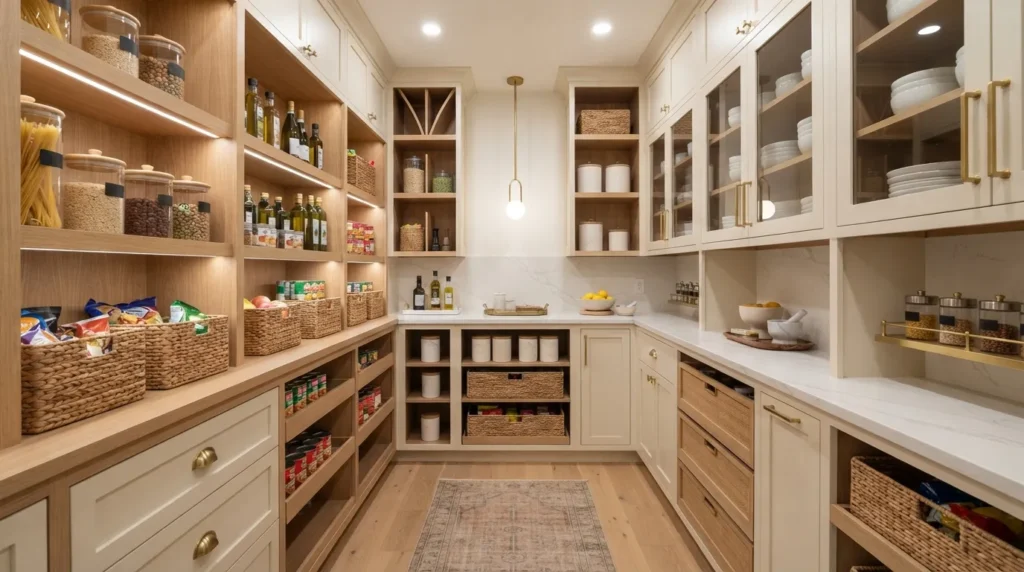
Floor-to-ceiling shelving creates maximum storage without expanding the footprint. Integrated drawers make deep areas easier to access. Warm lighting highlights beautiful materials, while glass doors, natural wood, stone-look surfaces, and brushed metal details introduce a more elevated appearance.
In my experience, a luxury feeling comes from consistency. When shelf finishes, containers, hardware, lighting, and colors relate to one another, even a very small pantry can look intentional and sophisticated.
The layout also matters as much as the materials. A beautiful pantry becomes frustrating when the shelves are too deep or the walkway is too narrow. Everyday items belong in the easiest-to-reach zones, while bulk supplies and occasional-use pieces can occupy higher or lower storage.
These ten ideas focus on creating that balance. Each design combines elegant details with practical storage strategies so the pantry remains useful for everyday life.
Table of Contents
1. Floor-To-Ceiling Cabinetry
Use vertical cabinetry to maximize storage while creating a custom built-in appearance.
2. Marble-Look Shelving
Add a refined stone-inspired surface that gives a compact pantry an upscale character.
3. Brass Hardware Details
Use warm metal accents to introduce a subtle luxury finish without overwhelming the room.
4. Glass Door Storage
Combine visibility and elegance with glass-front cabinets for attractive pantry essentials.
5. Hidden Appliance Zone
Create a dedicated appliance area that keeps counters clear and the pantry visually organized.
6. Pull-Out Storage
Use smooth drawers and sliding shelves to make compact storage easier to access.
7. Warm Wood Finish
Introduce natural wood to balance polished materials and create a welcoming atmosphere.
8. Designer Lighting
Layer practical illumination with decorative fixtures to make the pantry feel intentional.
9. Custom Corner Layout
Use every corner intelligently with cabinetry designed around the pantry’s exact dimensions.
10. Monochrome Styling
Create a sophisticated, cohesive look with one restrained color family and carefully selected textures.
1. Floor-To-Ceiling Cabinetry
Quick Benefits
- Maximizes vertical storage
- Creates a custom built-in appearance
- Keeps supplies visually organized
- Makes small rooms feel intentional
- Provides space for multiple storage zones
Why It Works
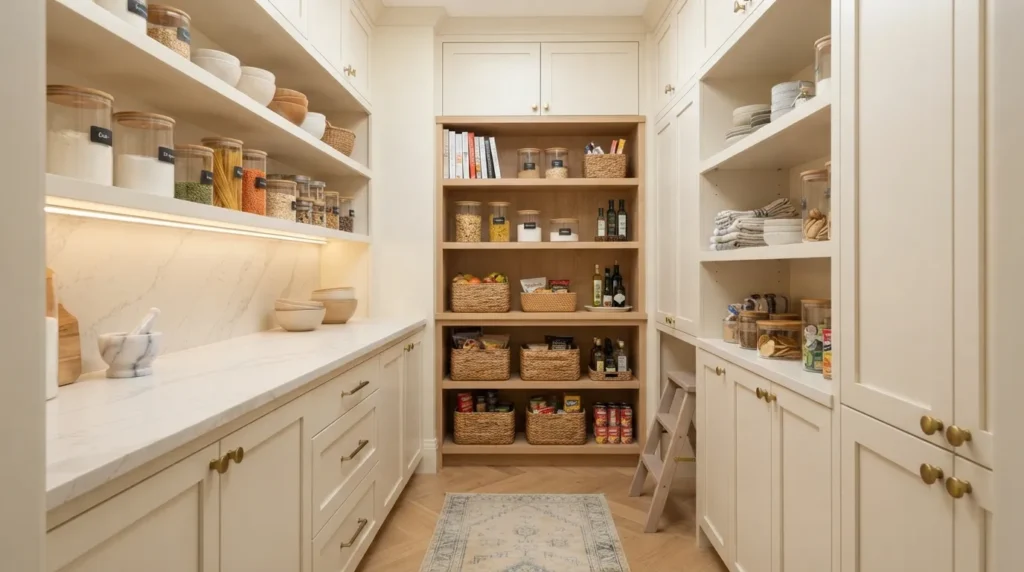
Floor-to-ceiling cabinetry immediately gives a small pantry a more architectural appearance. Instead of seeing isolated shelves and unused wall space, the eye reads the entire wall as one carefully designed storage system.
This approach is especially useful when square footage is limited. Vertical cabinets can provide generous storage without taking additional floor area, while upper compartments become useful for backup groceries and seasonal items.
The luxury effect comes from consistency. Matching doors, aligned hardware, clean shelf lines, and a restrained color palette create a custom appearance even when the room itself is compact.
A practical layout also matters. Everyday foods belong at comfortable heights, while less frequently used items can occupy the upper sections.
How To Style It
Choose cabinetry in a warm white, soft beige, muted taupe, or rich wood tone depending on the kitchen’s existing finishes.
Use a combination of drawers, adjustable shelves, and closed cabinets. Drawers work well for smaller products, while open shelving provides quick access to frequently used items.
Place heavier supplies lower down and reserve the upper cabinets for backup inventory.
For a luxury appearance, keep cabinet hardware consistent throughout the room. Slim brass pulls or understated metal knobs can create a polished detail without distracting from the cabinetry.
Add integrated lighting under shelves or inside cabinets where practical.
2. Marble-Look Shelving
Quick Benefits
- Adds an upscale appearance
- Creates visual contrast
- Works with neutral cabinetry
- Introduces subtle texture
- Complements brass and wood
Why It Works
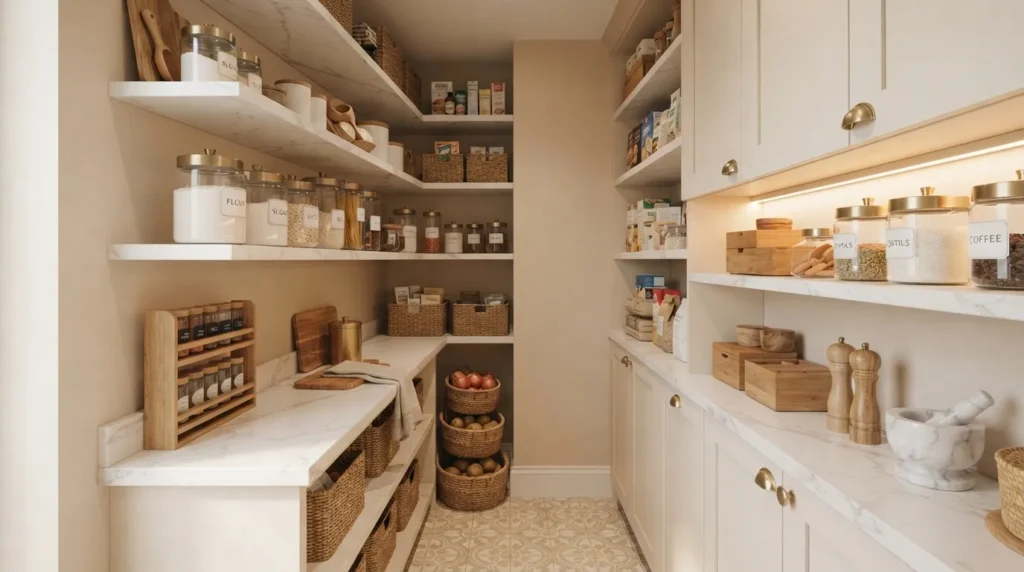
Marble-inspired surfaces can give a small pantry an elevated appearance without requiring an abundance of decorative elements. The natural-looking veining adds movement to an otherwise simple space.
The key is restraint. In a compact pantry, a heavily patterned stone across every surface can become visually overwhelming. A subtle marble-look material with soft veining often feels more sophisticated.
Pairing stone-inspired surfaces with simple cabinetry allows the material to become a refined accent rather than competing with every storage element.
This style works particularly well when the pantry connects directly to a kitchen with stone countertops. Repeating a related undertone creates visual continuity between the two spaces.
How To Style It
Use a marble-look surface for a narrow countertop, shelf backing, or selected shelving rather than covering every available wall.
Pair soft white or cream stone with warm white cabinets and brushed brass hardware. For a more dramatic pantry, use a darker stone-inspired surface against pale cabinetry.
Keep containers simple. Clear glass jars, white ceramic canisters, and understated labels allow the stone pattern to remain visible.
Natural wood accessories can soften the polished material. A wooden tray, cutting board, or small stool adds warmth without disrupting the luxury palette.
3. Brass Hardware Details
Quick Benefits
- Adds warmth
- Creates a polished finish
- Works with neutral colors
- Gives cabinetry a custom appearance
- Introduces luxury without excessive decoration
Why It Works
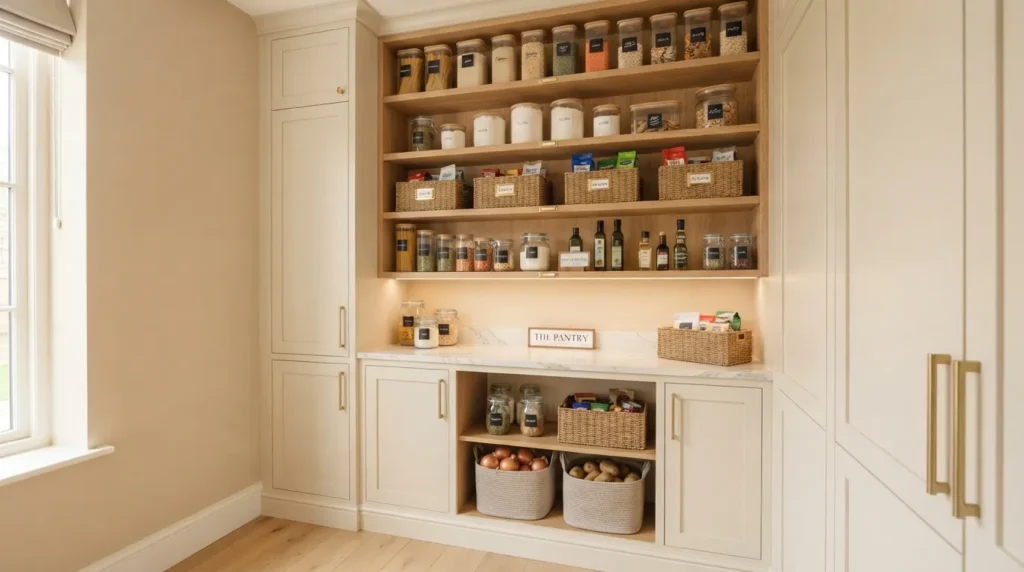
Hardware is one of the smallest details in a pantry, but it can have a noticeable effect on the overall design. Warm brass adds visual richness to otherwise simple cabinetry and can make a compact room feel more intentionally finished.
The most sophisticated approach is usually subtle. Rather than mixing several metallic finishes, choose one primary metal and repeat it consistently.
Brass works beautifully with warm white, cream, beige, olive, navy, charcoal, and natural wood. Its warmth can also soften marble-inspired surfaces and other cooler materials.
A mistake many homeowners make is treating hardware as an afterthought. In a small room where there are fewer decorative elements, hardware becomes more visible.
How To Style It
Choose cabinet pulls, drawer handles, or small knobs in a consistent brass finish. Satin or brushed brass offers a softer appearance than highly polished metal.
Pair brass with creamy cabinetry for a classic look or dark cabinetry for stronger contrast.
Use the same metal on any visible lighting fixture when possible. Repetition creates visual cohesion.
Keep the rest of the pantry relatively quiet. Simple clear containers and neutral baskets allow the hardware to provide a subtle decorative detail.
4. Glass Door Storage
Quick Benefits
- Displays attractive pantry items
- Protects contents from dust
- Creates visual depth
- Makes categories easier to identify
- Adds furniture-like character
Why It Works
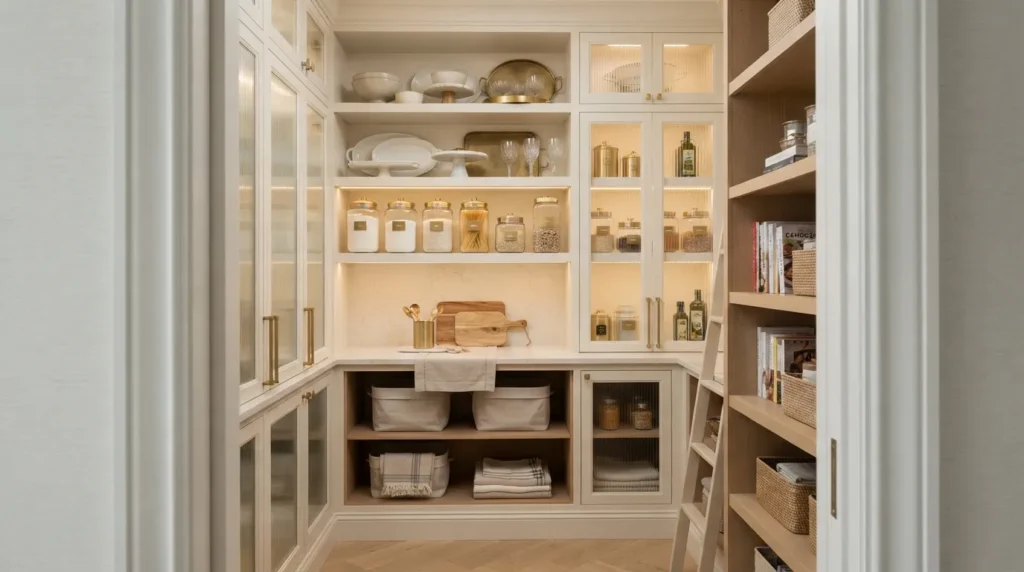
Glass-front cabinets can make a compact pantry feel more like a beautiful butler’s pantry than a basic storage room. The transparency adds depth and allows attractive containers and dishes to become part of the design.
Glass also helps you see what you have without opening every cabinet.
The trick is keeping the contents organized. Glass doors make clutter more visible, so this layout works best when products are grouped and containers are relatively consistent.
Reeded or textured glass can offer a more forgiving alternative to completely clear glass. It provides the elegance of transparency while softly obscuring minor visual imperfections.
How To Style It
Use glass-front cabinets for attractive categories such as glass jars, serving dishes, beverages, baking containers, or neatly labeled dry ingredients.
Keep the most visually pleasing items at eye level. Less attractive packaging can remain behind solid doors.
Choose cabinetry in a warm neutral color and use simple brass or bronze hardware.
Interior lighting can make glass cabinets especially beautiful in the evening. Use appropriately rated fixtures and professional installation where electrical work is required.
5. Hidden Appliance Zone
Quick Benefits
- Keeps appliances contained
- Protects kitchen counter space
- Creates a dedicated work area
- Reduces visual clutter
- Makes frequently used equipment easier to access
Why It Works
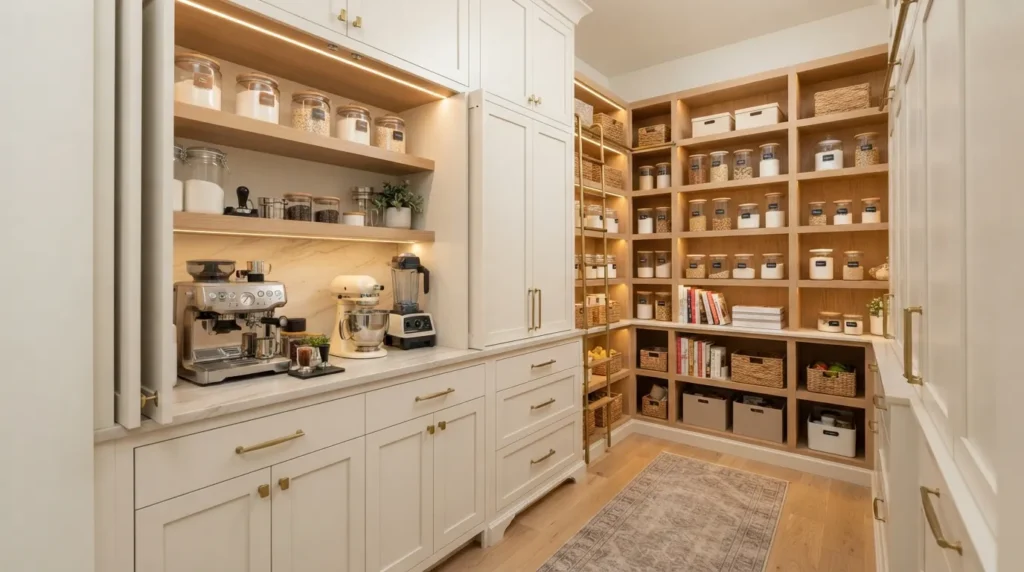
A luxury kitchen often feels luxurious because the counters are visually calm. A compact pantry can help achieve that same effect by creating a dedicated home for small appliances.
A hidden appliance zone keeps coffee makers, mixers, blenders, and food processors organized without requiring them to remain visible in the main kitchen.
The layout works best when the appliance zone is planned around actual usage. Frequently used appliances need easy access and appropriate counter space. Less frequently used machines can occupy lower cabinets.
Electrical planning and appliance safety are essential. Any powered appliance area needs suitable outlets, ventilation, and clearance based on the specific equipment and local requirements.
How To Style It
Create a narrow countertop with cabinets or drawers underneath and open shelving above.
Place the most frequently used appliance in the easiest-to-reach position. Keep accessories and attachments in nearby drawers.
Use a stone-look or durable countertop surface for a polished appearance.
A cabinet door can hide the appliance station when the area is not being used. Alternatively, an open niche can make the appliance easy to grab while still keeping the kitchen’s main counters clear.
6. Pull-Out Storage
Quick Benefits
- Improves access to deep areas
- Uses narrow spaces efficiently
- Makes small items easier to organize
- Reduces wasted shelf space
- Creates a custom cabinetry feel
Why It Works
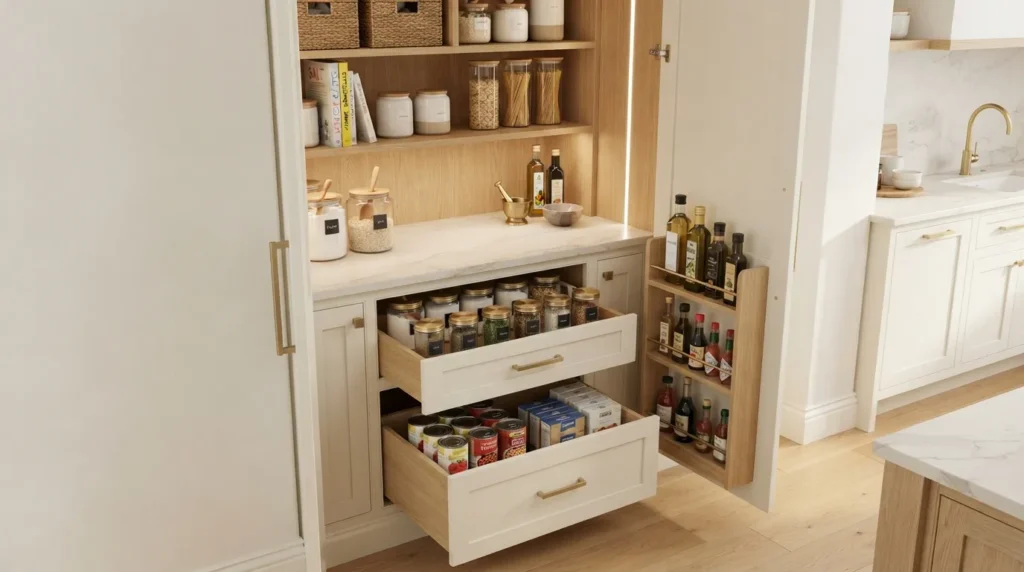
Pull-out storage is especially valuable in a small pantry because deep cabinets can quickly become difficult to use. Sliding shelves bring the contents forward, eliminating the need to reach into dark corners.
This feature also creates a custom-designed impression. Instead of seeing a basic shelf, you experience a storage system that responds to the way the room is used.
Narrow pull-outs can hold oils, sauces, spices, and bottles. Wider drawers can organize canned goods, baking ingredients, or packaged foods.
The goal is to use each pull-out for a defined category rather than allowing it to become another miscellaneous storage zone.
How To Style It
Use matching drawer fronts throughout the cabinetry so the pull-outs feel integrated.
Reserve narrow vertical pull-outs for bottles and condiments. Use wider drawers for cans, dry ingredients, or kitchen accessories.
Simple labels can make each drawer easier to maintain.
Keep heavy items on lower pull-outs and lighter everyday products at waist height.
Choose hardware that matches the rest of the pantry for a seamless appearance.
7. Warm Wood Finish
Quick Benefits
- Adds natural warmth
- Balances polished materials
- Creates a custom appearance
- Works with neutral palettes
- Makes the pantry feel inviting
Why It Works
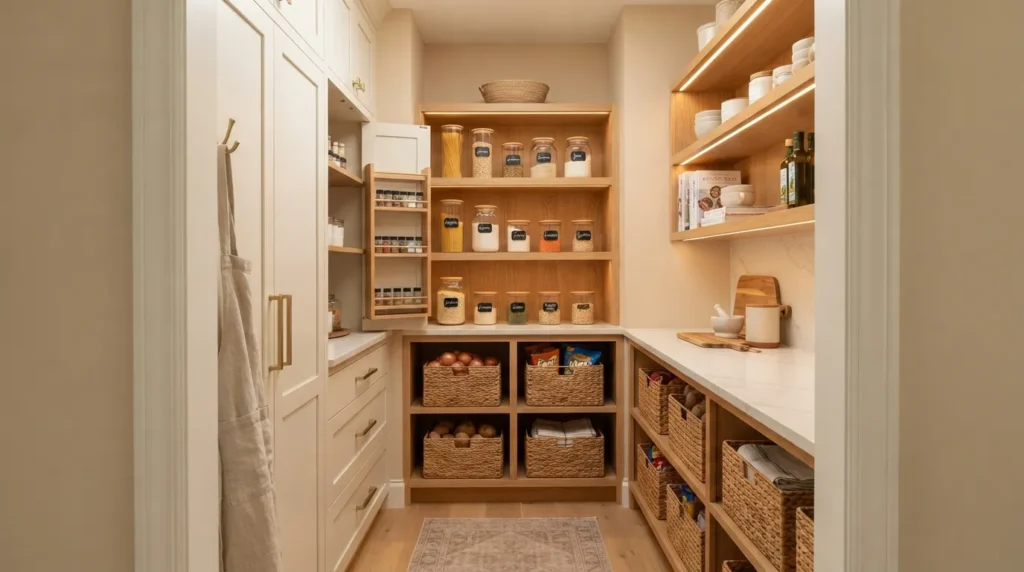
Natural wood can prevent a luxury pantry from feeling overly formal or cold. Its grain introduces organic texture and creates contrast against smooth cabinetry, stone surfaces, and metal hardware.
Warm oak, walnut, and medium wood tones can all work, depending on the overall kitchen palette.
Wood is particularly effective in small spaces because it adds character without requiring patterns or decorative objects.
The best results usually come from using wood intentionally. A single wall of shelving, countertop, drawer fronts, or accent details can be enough.
How To Style It
Use natural wood shelving against warm white or creamy walls. Pair it with brass hardware for a sophisticated yet welcoming look.
If the pantry already has wood flooring, select a related undertone rather than attempting to match the grain exactly.
Use woven baskets and neutral ceramic containers to reinforce the organic palette.
For a contemporary appearance, combine clean-lined wood shelving with flat-panel cabinetry and minimal decoration.
8. Designer Lighting
Quick Benefits
- Improves visibility
- Highlights materials
- Creates ambiance
- Makes storage easier to use
- Adds architectural character
Why It Works
Lighting can transform the feeling of a small pantry. Even expensive finishes can look ordinary when shelves are hidden in shadows.
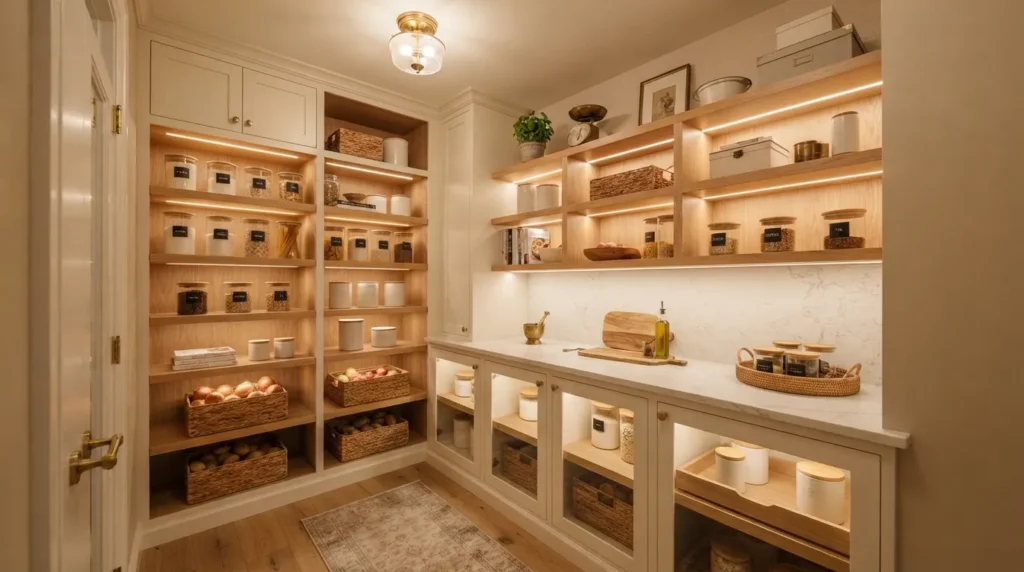
Layered lighting creates both function and atmosphere. General illumination helps you navigate the room, while shelf or cabinet lighting highlights storage areas.
A decorative pendant or small ceiling fixture can add personality if the ceiling height and layout allow it.
The most effective lighting is intentional rather than excessive. The goal is to illuminate the products and work areas while creating a warm, comfortable environment.
How To Style It
Use a central ceiling fixture for general illumination and add under-shelf or cabinet lighting where appropriate.
Warm white light can complement cream, beige, brass, and wood finishes. A neutral white light can work well in contemporary spaces where color accuracy is important.
Choose a small decorative fixture that relates to the kitchen’s hardware.
Avoid oversized lighting in a tiny room. The fixture needs to provide enough light without visually dominating the limited space.
9. Custom Corner Layout
Quick Benefits
- Maximizes difficult areas
- Creates a built-in appearance
- Improves storage capacity
- Supports customized organization
- Makes the room feel professionally planned
Why It Works
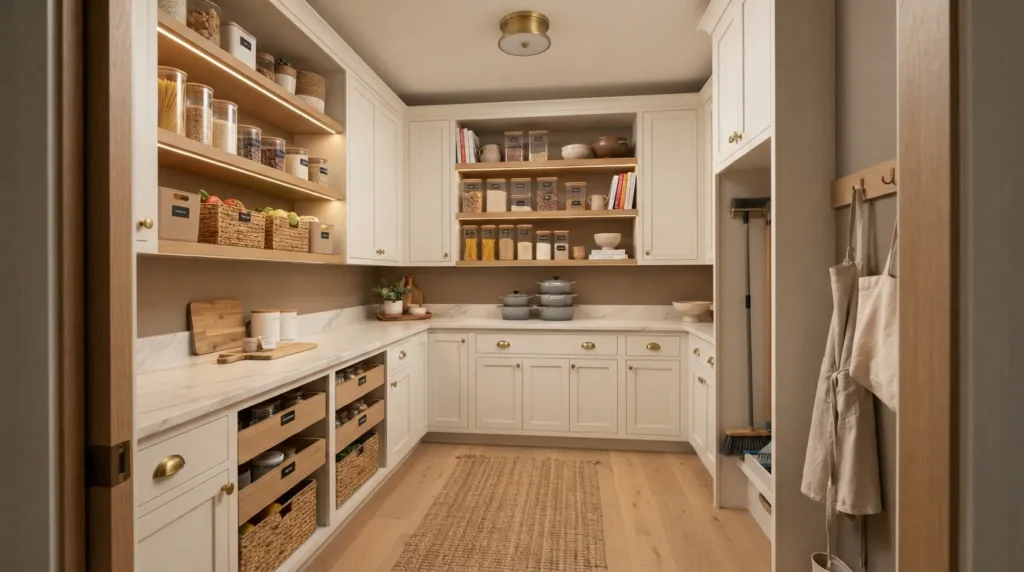
A custom corner layout can turn awkward geometry into one of the pantry’s greatest strengths. Instead of forcing standard shelves into the room, cabinetry can follow the exact walls and create continuous storage.
L-shaped and U-shaped configurations can work in different compact layouts, provided there is enough clearance for comfortable movement.
Corners are ideal for less frequently accessed items, while the easiest-to-reach areas can hold everyday supplies.
Custom planning also allows storage types to vary from one wall to another. One side might contain drawers, another open shelving, and another a dedicated appliance station.
How To Style It
Start by identifying the pantry’s longest wall and most accessible corner. Use these areas for everyday products.
Create an L-shaped system where appropriate, keeping the corner shelves shallow enough to remain usable.
Use matching cabinetry and shelf finishes around the entire room.
Add lighting under upper shelves to prevent corners from becoming dark.
If the pantry is very small, resist the urge to maximize every possible shelf. Preserving a comfortable pathway creates a more luxurious experience.
10. Monochrome Styling
Quick Benefits
- Creates visual calm
- Makes the pantry feel cohesive
- Highlights texture
- Works well in compact spaces
- Gives a refined appearance
Why It Works
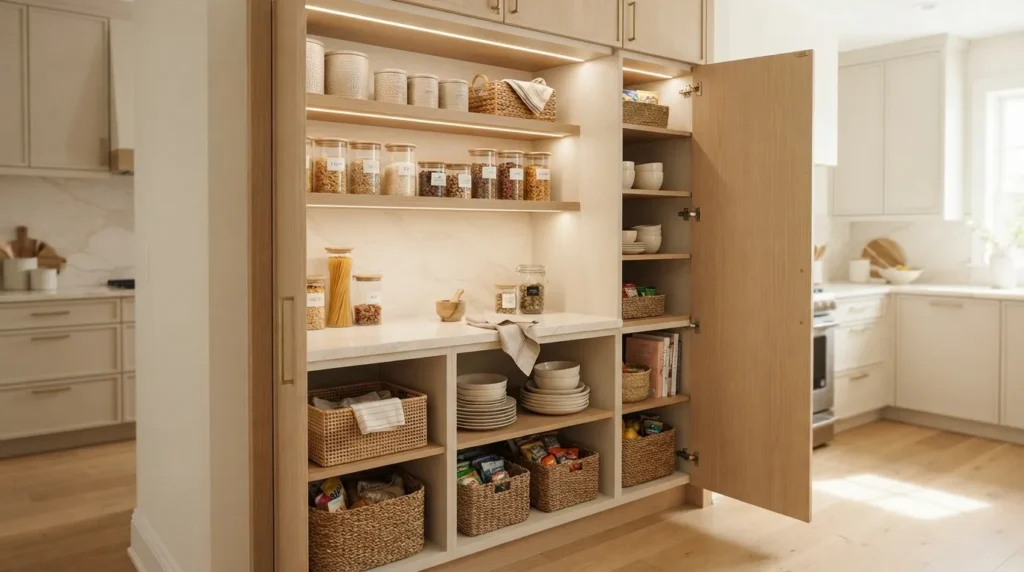
A monochrome palette can make a small pantry look larger and more sophisticated because the eye moves smoothly across related colors.
This does not mean every element needs to be identical. A successful monochrome design uses different shades and textures within one color family.
A warm white pantry might include ivory walls, cream cabinets, pale stone, natural wood, and light woven baskets. A darker version could combine charcoal cabinetry, deep gray tile, black hardware, and dark wood.
The reduced color variation allows materials and textures to become the visual interest.
How To Style It
Choose one dominant color family and introduce two or three related tones.
For a warm neutral pantry, combine ivory cabinetry, beige stone, light oak, cream containers, and brushed brass.
Keep labels simple and consistent. Clear containers can prevent the room from becoming visually crowded.
Use texture instead of additional colors to add depth. Woven baskets, wood grain, ribbed glass, and subtle stone variation can all enrich the room while maintaining a restrained palette.
Creating a Luxury Feel on a Small Budget
A luxurious pantry does not require every surface to be custom-made.
Start with the details that have the greatest visual impact. Consistent hardware, good lighting, matching containers, and a cohesive color palette can change the appearance dramatically.
If the cabinetry is basic, upgrading the handles can make a noticeable difference. If the shelves are plain, adding attractive baskets and carefully arranged containers can create visual consistency.
Lighting is another high-impact improvement. Bright, well-positioned illumination makes storage easier to use and helps materials look more intentional.
You can also use one premium-looking material as an accent rather than covering the entire pantry. A marble-look counter, wood shelf, or brass fixture can provide the elevated detail while keeping the rest of the room simple.
Small Pantry Layout Planning
Before selecting finishes, measure the entire room.
Record:
- Wall-to-wall dimensions
- Ceiling height
- Door swing
- Window locations
- Outlet positions
- Ventilation
- Existing plumbing
- Appliance locations
- Available walking clearance
Then create storage zones.
Place frequently used ingredients between waist and eye level. Keep heavy supplies lower. Store backup products higher.
If the pantry is narrow, prioritize shallow shelving over maximum depth. If it has a wider footprint, consider an L-shaped or U-shaped arrangement.
The most elegant pantry layout is one that feels easy to move through.
How to Make a Small Pantry Look Custom
Consistency creates a built-in feeling.
Use the same cabinet color across the room. Align shelf edges. Choose one hardware finish. Repeat materials instead of introducing a new finish for every storage element.
Matching containers can also make open shelving feel intentional.
Labels help maintain visual order, but they do not need to be oversized. Small, consistent labels are enough.
Keep countertops mostly clear. If an appliance station exists, contain its accessories in nearby drawers or baskets.
Finally, give the eye somewhere to rest. Leaving a little space between categories can make the entire pantry feel more refined.
Luxury Pantry Storage Priorities
When space is limited, prioritize features according to frequency of use.
First priority: Everyday foods and cooking essentials.
Second priority: Frequently used appliances and baking supplies.
Third priority: Backup groceries.
Fourth priority: Seasonal serving pieces and specialty equipment.
This hierarchy prevents the most useful areas from being consumed by items used only a few times each year.
A pantry can hold a surprising amount when every zone has a purpose.
Related Articles
- 10 Luxury Kitchen Ideas With Timeless Designer Details
- 10 Small Kitchen Organization Ideas for Beautiful Storage
- 10 Modern Pantry Ideas for a Clean and Elegant Home
- 10 Walk-In Pantry Ideas With Smart Storage Solutions
- 10 Kitchen Cabinet Ideas for a Sophisticated Remodel
Frequently Asked Questions
How do you make a small pantry look luxurious?
Focus on consistency rather than filling the room with expensive materials. Matching cabinetry, attractive hardware, layered lighting, coordinated containers, and a restrained color palette can create an upscale appearance. One accent material such as natural wood or marble-look stone can add character without overwhelming a compact space.
What is the best layout for a small pantry?
The best layout depends on the room’s dimensions. Narrow pantries often benefit from shallow shelving along one or both walls. Wider spaces can accommodate L-shaped or U-shaped storage. Keep frequently used items at comfortable heights and maintain enough open floor space for easy movement.
What colors make a pantry look expensive?
Warm white, cream, beige, taupe, soft gray, deep charcoal, and natural wood can all create a sophisticated appearance. The most important factor is consistency. A restrained palette with coordinated textures often looks more refined than a room containing many unrelated colors.
Are glass pantry doors practical?
Glass doors can be practical when the contents are organized because they allow you to see what is stored inside. Reeded or textured glass can offer a softer appearance and hide minor clutter. Clear glass works best when containers and shelves are kept visually consistent.
What hardware looks luxurious in a pantry?
Brushed or satin brass is a popular choice for adding warmth and sophistication. Matte black, bronze, and polished nickel can also work depending on the kitchen’s style. Matching the pantry hardware with nearby kitchen finishes creates a more cohesive appearance.
How can I add luxury to a pantry without remodeling?
Start with lighting, hardware, containers, labels, and organization. Replacing mismatched storage products with coordinated containers and baskets can instantly improve the appearance. A small wood shelf, decorative light, or stone-look countertop can also introduce a high-end detail without changing the entire room.
Should a small pantry have open or closed storage?
A combination is often practical. Open shelves provide quick access and display attractive containers, while closed cabinets hide less attractive packaging and backup supplies. In a very small pantry, closed storage can reduce visual clutter, while open shelves can make frequently used items easier to reach.
Conclusion
A small pantry can feel remarkably luxurious when every design decision supports both beauty and function.
The most successful layouts begin with the room’s actual dimensions. Floor-to-ceiling cabinetry maximizes vertical space, pull-out drawers improve accessibility, and carefully designed corners create additional storage without sacrificing the walking path.
From there, materials create the atmosphere. Warm wood adds character, marble-look surfaces introduce refinement, brass hardware provides subtle shine, and layered lighting makes the entire room feel more intentional.
You also do not need to renovate every surface to create an elevated result. A coordinated palette, matching containers, attractive hardware, and better lighting can change the character of an existing pantry.
Start with the areas that cause the most frustration. If deep shelves are difficult to use, consider pull-outs. If counters are crowded with appliances, create a dedicated appliance station. If the room feels dark, improve the lighting before adding more decor.
Luxury ultimately comes from ease. When everything has a logical place and the pantry feels comfortable to use, the space becomes more than storage. It becomes a beautiful, practical extension of the kitchen.