How to Squeeze a Trash Can Between Toilet and Vanity in a Tight Bath
Successfully squeezing a trash can between toilet and vanity in a tight bath requires precise measurements and an understanding of spatial constraints. Most homeowners struggle with this layout because standard waste bins often lack the slim profiles necessary to fit into gaps narrower than eight inches.
By assessing the actual clearance and choosing the right form factor, you can maintain a clean bathroom aesthetic without sacrificing functionality. This article explores the best strategies for selecting, placing, and maintaining slim waste receptacles in your small bathroom.
Measuring Your Available Clearance
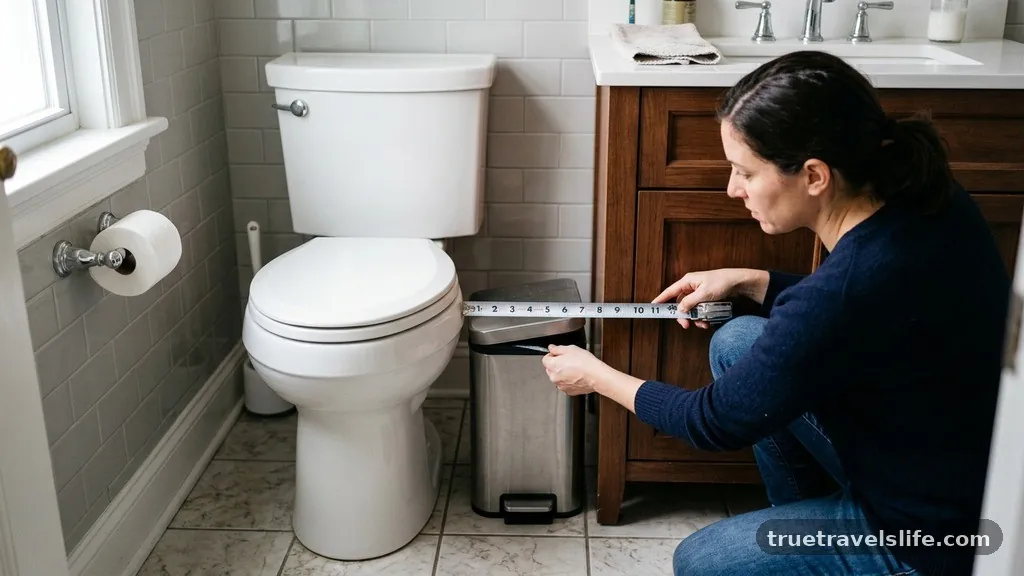
Before you purchase any equipment, you must determine the exact width of the gap between your fixtures. Use a metal tape measure to check the distance at both the floor level and the height where the vanity cabinet might protrude. Sometimes, a vanity has a decorative trim or a baseboard that narrows the gap significantly compared to the floor space.
Record the narrowest point of this gap, as this is your functional limit. If your measurement is less than five inches, you will likely need to look for ultra-slim, specialized containers rather than standard department store models. Ensure you also account for the plumbing pipes that might run behind the toilet or under the vanity, as these can occasionally obstruct the depth of the space.
Selecting the Right Waste Bin Profile
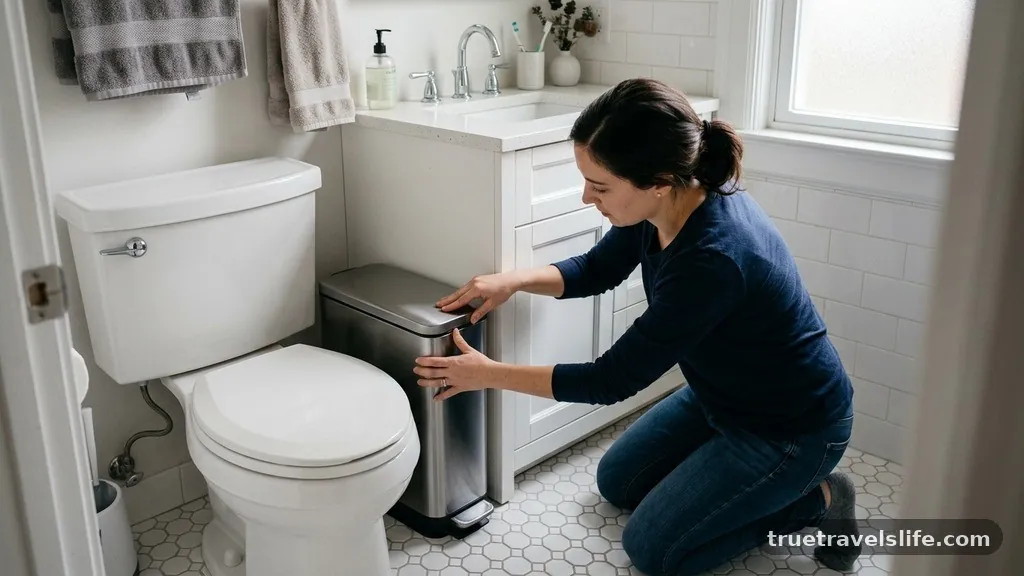
When you are squeezing a trash can between toilet and vanity in a tight bath, the shape of the bin matters more than the volume. Traditional round bins are inefficient in tight quarters because they waste the corners of the available space. Instead, look for rectangular or D-shaped bins designed specifically for narrow gaps.
A rectangular bin allows you to push the unit flush against the side of the vanity or the toilet tank. This orientation maximizes the internal capacity while keeping the exterior footprint as small as possible.
Many modern designs feature a “slim-profile” label, which usually indicates a width of six inches or less. Always verify the dimensions on the packaging or product website before committing to a purchase.
Considering Lid Mechanisms
The lid of your trash bin can be the deciding factor in whether it fits or becomes a nuisance. A lid that opens upward on a hinge requires vertical clearance that you might not have if the vanity countertop hangs over the gap. If your space is tight, a swing-top lid might hit the side of the toilet or the vanity cabinet every time you try to open it.
Consider a bin with a pedal-operated lid if you have the clearance, or opt for an open-top model if the bin is tucked far enough back. Some slim bins feature a “shutter” or “butterfly” style opening where the lid splits in the middle. These designs require less vertical space to operate and are ideal for areas squeezed between two fixed objects.
Material Choices for Damp Environments
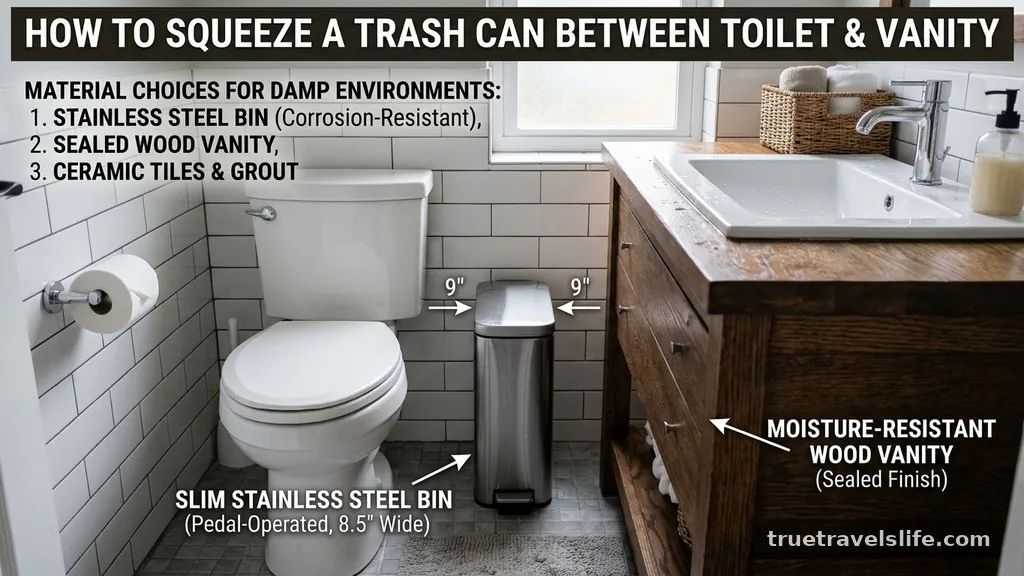
Bathrooms are naturally humid, and a trash can tucked between two fixtures will not get much airflow. Avoid materials that are prone to rust or that absorb odors over time. Stainless steel is a popular choice, but ensure it is fingerprint-resistant to keep the exterior looking clean.
Plastic bins are often the most practical choice for very tight gaps. They are lightweight, easy to wipe down, and typically cheaper than metal alternatives.
If you choose plastic, look for high-density polyethylene or polypropylene, as these materials resist cracking and are easy to disinfect. A non-porous surface is essential for maintaining hygiene in a confined, high-traffic area.
Strategies for Hidden Placement
If you prefer to keep your waste management out of sight, you might consider attaching a small bin to the side of the vanity cabinet. Some homeowners use adhesive hooks or magnetic strips to mount a light plastic bin directly onto the vanity wall. This keeps the bin off the floor, making it easier to clean the bathroom tile underneath.
Another option is to use a slim, wall-mounted bin that sits just above the floor. By elevating the bin, you eliminate the need to wiggle it into a tight, dark corner. This setup makes it much easier to empty the bin and keeps the floor area clear, which can make a small bathroom feel slightly larger.
Maintaining Hygiene in Confined Spaces
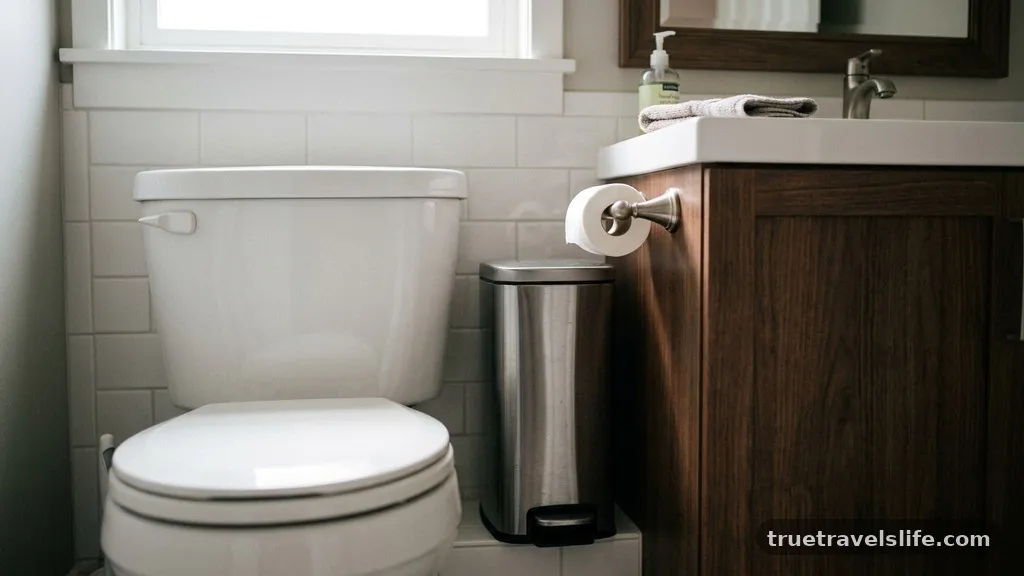
Because the bin is in a tight spot, it is easy to forget about it until it becomes an issue. Small bathrooms often experience odor buildup more quickly because of the lack of ventilation. Use small, scented trash bags or place a deodorizing charcoal packet at the bottom of the bin to neutralize smells.
You should also commit to a regular emptying schedule, even if the bin isn’t full. A small bin in a tight space is prone to becoming a “forgotten” item that collects wet paper or damp cotton swabs. Emptying it every two to three days will prevent the accumulation of bacteria and keep the area around your toilet fresh.
Comparison of Common Bin Types for Tight Spaces
When choosing between different styles of waste containers, consider how each design interacts with your specific bathroom layout. The following table provides a breakdown of how various profiles perform in constrained bathroom environments.
| Bin Type | Best For | Space Efficiency | Ease of Use |
|---|---|---|---|
| Rectangular Slim | Narrow gaps | Excellent | High |
| D-Shape | Corner placement | Good | Medium |
| Wall-Mounted | Very tight gaps | Superior | Medium |
| Open-Top | Frequent access | Moderate | High |
Utilizing Vertical Space Instead
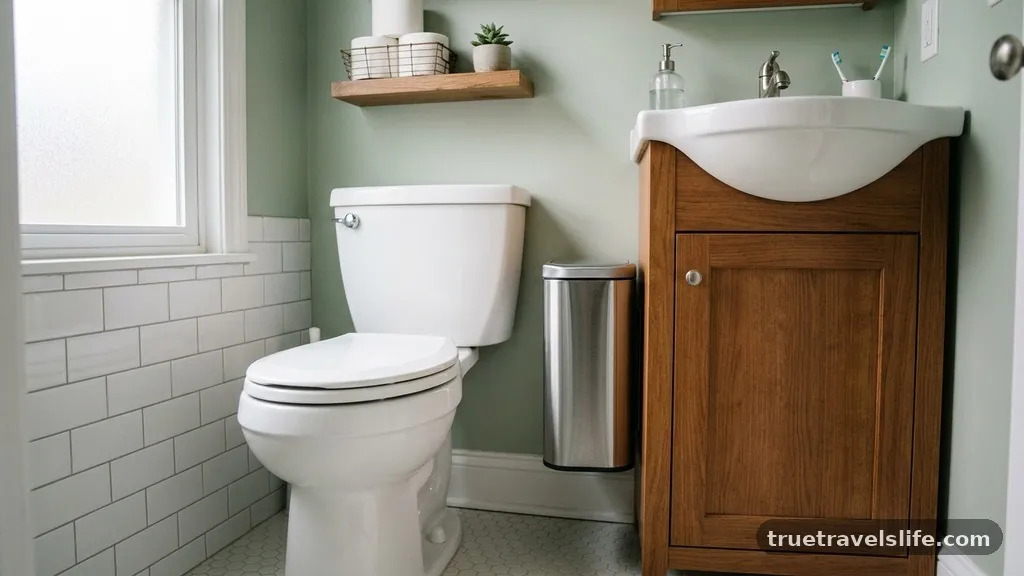
If the gap between your toilet and vanity is truly too small for even the slimmest floor bin, look upward. Many bathroom organizers are designed to sit over the back of the toilet tank. You can attach a small basket or a hanging bag to these units to serve as a trash receptacle.
This approach removes the need to squeeze a trash can between toilet and vanity in a tight bath entirely. It keeps the floor clear and utilizes the dead space above the toilet. Many decorative options exist that look like part of a cohesive bathroom set rather than a makeshift solution.
Creative DIY Solutions
Sometimes the best solution is a custom modification. If you are handy, you can build a simple pull-out drawer that fits the exact width of your gap. This allows the trash bin to slide out on a track, making it easy to access without having to lift it out of a cramped space.
Alternatively, you can use a tension rod or a hook to suspend a small fabric or mesh bag in the gap. While this isn’t a traditional “bin,” it serves the purpose of holding waste in a very narrow width. It is also extremely easy to remove and wash, which is a significant advantage in a small bathroom.
Checklist for a Successful Installation
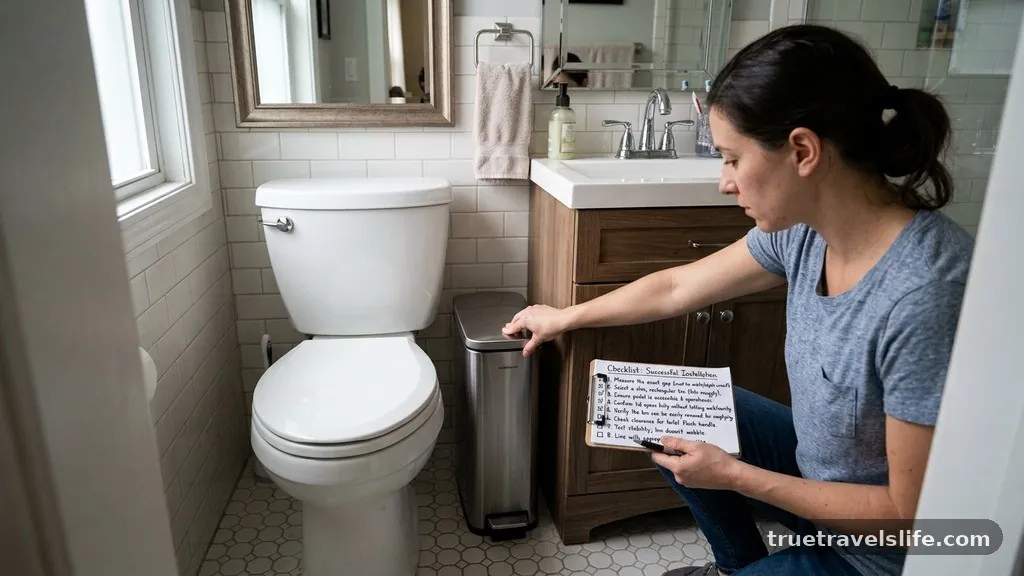
To ensure you don’t run into issues after purchasing your bin, follow this quick checklist. These steps will help you confirm that your chosen product will actually work in your space.
- Measure your gap width at the floor and at the widest point of the toilet/vanity.
- Check for protruding pipes or baseboard molding that might reduce your usable width.
- Ensure the lid can open fully without hitting the wall or the underside of the vanity.
- Verify that the pedal mechanism, if present, is accessible from the front.
- Confirm that the bin is easy to remove for cleaning and emptying.
- Test the weight of the bin to ensure it won’t tip over when you open the lid.
Alternative Storage for Bathroom Waste
If you are struggling with the aesthetic of a visible bin, consider if you actually need a trash can in that specific spot. Some people choose to use a small, decorative basket on a shelf or under the vanity instead. This can blend in better with your decor than a plastic bin.
Others opt for a “discreet” approach by using a small bin with a lid that matches the color of the vanity. When the bin matches the cabinetry, it visually disappears into the background. This is a simple trick to make a small space feel less cluttered and more organized.
Conclusion
Successfully squeezing a trash can between toilet and vanity in a tight bath is entirely possible with the right planning. By taking accurate measurements and choosing a slim, rectangular, or wall-mounted bin, you can maintain a functional and clean space. Remember that the lid design and material quality are just as important as the physical dimensions when working in a humid, high-traffic environment.
If you find that a floor bin simply won’t fit, do not hesitate to explore vertical storage solutions or custom DIY options that keep your floor clear. With these strategies, you can optimize your bathroom’s layout and keep your daily routine efficient and tidy. Feel free to experiment with different placements to see what works best for your specific vanity and toilet configuration.